Sunday, January 3, 2016

The Greatest "Job" in the world!

"Main St" Sprague Creek. 
Those readers who know and/or follow me have often heard me make two statements "it is so much fun it is hard to call it work," and "we are honored and proud to be a part of the National Park Service."

Sprague Creek Campground. 
Sprague Creek Campground is the only campground at Glacier where the hosts have to be up by a certain time to open a gate. Each morning we roll out of bed in time to open the gate by 7am.  Since we're up we go ahead and do our first rounds. From then until noon or 1pm we will be busy helping campers get off on their adventures, introducing ourselves to our guests, teaching new campers about camping in the wilderness, and answering a plethora of questions.  Technically it is work, and actually it can be hard work, but for us it is our "people fix". We spent a few weeks working at a large campground where we didn't have this concentrated contact with the campers and it was like withdrawal.

Sprague Creek is very much in demand. It is a first-come campground, so it is not uncommon for there to be people sitting in their cars any time after 6am watching for someone to leave. This means that we are usually full by noon.  Between being full - therefore no new arrivals - and the fact that almost all of our campers will spend their days hiking, biking, kayaking or other adventures, we are free to have our own adventure.
In a short while this area will be filled with cyclist biking
across the US and just having come from the mountain pass.
They sleep in hammocks, small tents or under tarps.

We return home around dinner time. This is when our campers are returning and will be having questions. We will "work" from around 5pm until time to close the gate at 9pm. Sometimes we are called out after 9pm but that's not very common.  Our average work day is 9 hours long, but, as I've so often said, it is so much fun that it is hard to call it work.

The reason that we don't usually get called out after 9pm is that most of the campers are asleep by then or shortly thereafter. When you get up early, hike or bike or kayak all day, you are usually ready for bed early as well.

Campers gathered to share their adventures at days end.
Because it is more primitive - no trailers or large RVs allowed - Sprague Creek is popular among those who want to get away, serious campers, and world travelers.  By the end of May we will have hosted people who refer to themselves as "travelers" from ten to twelve different countries. We had a young woman who left home after college at age 21 to travel before settling down. She was 35 years old, had hiked and camped on every continent except Antarctica and hadn't been home yet. We had a family from France who had cycled from New York, heading to Alaska, with their two young children.  Then there was the couple my age (almost 70) who had dipped their toes in the Atlantic in February, climbed on their bikes, and were camping with us in May.
Sometimes it's just nice to sit and read. 

Pamela loves to teach the children and the children love her. When she takes them around the campground on mini-nature hikes there are always a few adults following along. Educating and making the campers' experience as profound as possible is one of our goals.  We also get the opportunity to help a lot of new campers learn about how to enjoy life in the wilderness as well as help experienced campers and back-country enthusiast plan their next adventure.

Lastly, but very far from least, we play an important part in the preservation and conservation of the wilderness. We do this by helping campers enjoy their stay without doing un-repairable damage to the environment as well as teaching conservation and environmentally friendly ways to enjoy the wilderness around them. We help people understand why we have certain rules and how to interact with wildlife they encounter.  This is important when you have all sorts of wildlife, including bears, roam through your campground from time to time.

If you want the greatest "job" in the world, ... want to do a great service to your country and the environment, ... want to help people really see and enjoy the wonders of the wilderness, you really want to visit www.volunteer.gov and make an application to become a National Park Service volunteer.

ALSO VISIT ME AT  www.facebook.com/old.conservationist 


Can Pamela come out and play?

We had just opened the gate at 7am and were grabbing some breakfast before doing our morning rounds when there was a knock at the door.  I opened the door to find five little blonde girls (sisters) from Minnesota standing there. Almost in unison they asked "can Pamela come out and play?" 
Pamela with the education table she put together in 2014

You'd think that this would be an uncommon scenario ... but it isn't.  Pamela love the kids and the kids love Pamela.  She will frequently start out taking a couple of children on a nature walk around the campground and end up with several children and often some adults. After a nature walk she will send them on hunts around the campground to find and identify types of wildflowers or trees.  The five little blondes were ready and eager for more.  "Okay, Pamela," I teased, "you can go play with your friends."  Pamela helps the youngsters complete their Junior Ranger book and earn their Junior Ranger badge. An interpretive Ranger at one of the visitor centers will get the honor of swearing them in and making a big deal at the center. But we get the best part.  We get to actually watch them complete the program and sign-off on their book.  To have a young person hold an often crumpled Junior Ranger book and a pen up to you and ask "will you sign my book" is priceless.  To get to sign on the line "Ranger" is an honor we take very seriously. 

Pamela with our boss, Ranger Justin Racioppi 
No matter what your job description is with the National Park Service, it in some way relates to making the visitor's stay as meaningful and exciting as possible.  Our days are long.  We average a 9-10 hours day. But when this type of experience is a part of your day, those are the best 9-10 hours of the day. 

We never look at our watches and wonder when we'll be done for the day. To the contrary we look forward to answering the door and hearing "can Pamela come out to play?"  

HAPPY 100th ANNIVERSARY NATIONAL PARK SERVICE.

Try to express the extent our love and admiration for the National Park Service is a daunting task. 
This isn't the best picture of us, but look at those smiles!  
I started ultra trail running when I was 63 years old and was tragically widowed when I was 65.  I ran through mountains and deserts of our National Parks all across the country.  I have always loved the wilderness but for some reason I never thought of volunteering for the National Park Service. 
At the end of 2013 I met Pamela. We both love to run, hike, cycle, camp . . . anything and everything outdoors. Pamela had been a triathlete until severe arthritis stopped her.  She not only introduced me to vintage trailers for which I now have almost as much passion as does she, but she asked if I would consider volunteering at Glacier National Park. 

Today she still laughs at my first reaction.  Sure, I'd love to work at the park, but for that many months?  Well, if you've followed me on Facebook or many of my blogs you'll know that that was a silly question. We want more!  We are now in our fourth season at Glacier and can't get enough time there.  We were thinking of just knocking around the Rocky Mts this year after the Glacier season ends, but we knew what would really make us the happiest . . . yesterday we put in our application for another national park where we will work from the close of Glacier to the end of November (assuming that we get the job) and we're looking for a third place to work between that and when we return to Glacier in May.  If we're lucky, we'll get to work at Glacier and two other parks each year. 

2016 is the 100th Anniversary of the National Park Service and we can not express how proud we are of the Park Service and how honored we are to be allowed to be a part of it.  Putting on the volunteer khaki and brown uniform is one of the greatest feelings.  

To conserve the scenery and the natural and historic objects and the wildlife therein and to provide for the enjoyment of the same in such a manner and by such means as will leave them unimpaired for the enjoyment of future generations. 
                                                      National Park Service Organic Act, 1916  

HAPPY 100th ANNIVERSARY


Friday, January 1, 2016

Exploring Howe Ridge

Howe Ridge burning during Robert Fire of 2003
Taken from the east side of Lake McDonald
Howe Ridge on the west side of Glacier National Park's Lake McDonald was one of the hot spots of the infamous Robert file of 2003. The heat along this ridge was so intense that people standing on the east side of the lake, almost two miles from the ridge, had to seek cover.  In 2014, Pamela and I hiked the trail along the lake at the foot of the ridge through the burn area.  You couldn't call it pretty, but you had to admire natures way of recovering.  Actually, fire is a very important part of the cycle of life in the woods which humans have attempted to alter. But that's another story.

In July of 2015 one of the campground hosts at Fish Creek Campground had to leave suddenly. Fish Creek is a large campground and too much for one couple to maintain for almost two months that remained in the season.  Pamela and I volunteered to work at the campground while our boss' boss found someone who could finish the season. This was the first time that we had worked in this part of the park.  Sprague Creek, where we spend the first half of the season, is about 11 miles into the park. Most of our activity is between there and Logan Pass. We only venture to the south end of Lake McDonald when we have meetings, are visiting friends or need to get a telephone signal.

Map of Howe Ridge Trail (yellow) from satellite photo
In exploring our new territory my attention was drawn to the Howe Ridge Trail.  I knew that the southern trailhead was on the Inner-Camus Road, a dirt road that runs up to Polebridge but hasn't been totally open for many years. I knew that the entire trail was inside the Robert fire burn area. It would not be a tree-covered hike.  Despite what I thought I knew and what I thought I was prepared for, I was wrong.

The trailhead
Since we were living only about 2 miles from the trailhead, I decided not to drive. That was a good decision.  Even though you have to go very slowly along this section of the Inner Camus Road, I could have missed the sign and there was no parking area. If I didn't have my topographic map with me which told me where the trailhead should be, I could have missed it hiking. Had it really been that long since anyone hiked the Howe Ridge Trail?  Evidently. The Lake McDonald Trail, which can actually be seen in the above photo running along the lake, is easy to see on a satellite photo. Not so the Howe Ridge Trail.

Wildflowers were magnificent
It became evident that no one had been on this trail for a really long time when I found it difficult to follow the trail. The new growth that followed the fire had almost totally obscured the trail and at times I wasn't sure if I wasn't following a small animal run.  The only reason that I was confident that I was on the trail was that I'm confident of my topographic map skills and they said I was on the trail. Before starting a steep ascent to to the top of the 4,668 foot ridge of lateral moraine I passed through a heavy stand of saplings and wild flowers with the skeletons of burned trees around me. After about a half mile I was beginning the ascent. The trail ran along the side of the ridge, open and barren, with a panoramic view of the burn area opening up in all directions.

One thing to which I did give serious consideration was wildlife. Right across the valley is an area which is frequently closed because of Mountain Lion activity.  Up the road, just a short distance west and north is an area where you can almost always count on a bear.  I was on a trail that was so overgrown that I couldn't see more than a few yards in any direction until I got a couple of hundred feet up the side of the ridge. So I had to decide whether I wanted to hike that first half mile alone in such density. I didn't know that it would start opening up in about a half mile, so I decided if it didn't get better soon I'd scrub the hike.  I hiked along singing loudly. When I wasn't singing I would talk to brother and sister bear as though they were standing right there which they could have been without being seen.

It might be good to share with those of you who are new to my wilderness stories to know that I do have a lot of back-country experience. I remind my children that I'm adventuresome not foolhardy. Most of my previous solo back-country adventures had been ultra trail runs in the eastern mountains. The only reason that I had been doing the trail patrol - about 8-15 miles of trails a week - alone and so many solo hikes is because Pamela's knees were bone-on-bone.  She would have bi-lateral (both knees) complete knee replacement in December. Even when I'm doing a day hike of 10 miles or less, like this hike, I go prepared to be gone as long as it takes. That means carrying my 20 pound survival pack complete with survival kit, 4L of water, food and a number of emergency devices like ResQLink and SteriPen.  Actually you won't find me leaving a paved road without it. You don't have to be 50 miles from civilization to need such a pack.  You will also notice ice cleats hanging from the pack. They are always there. On June 23rd 2014 we had almost 30 inches of snow at elevations above 6,000 feet. Occasionally someone will tease me a bit because I always wear gaiters and use trail poles, but I've never been teased by anyone with real back-country experience.
The trail began to open as I
gained elevation. 

Looking northwest  
Even as the trail opened I continued to sing. By this time it just seemed the thing to do and I was enjoying it.  The only time I stopped was when I stopped to admire the view.  I had learned a lot about how a forest recovers after a fire but here I was seeing it in person. Granted it had been 12 years but the process was right before me. The wild flowers were thick. Following the growth of flowers and shrubs come the Lodgepole pines. The cones of the Lodgepole are pyriscent. They need fire to reproduce. The fire melts a resin that seals the cones and releases the seeds.  It is knowing that fire is a necessary and beneficial part of the cycle of life of a forest that makes this hike so enriching. I look out over the new growth and stand in awe of the power of nature.

I arrived at the  top of the ridge, 4,668 feet up  and 1,468 feet above where I started at the Fish Creek Campground.  After 12 years the shrubs and new growth were about my height. I had been anxious to see the view from the top of the ridge but, alas, all I could see was the new growth. The picture below was taken by climbing up on a large pile of fallen trees.

Lake McDonald from atop Howe Ridge
 The new growth at the top of the ridge was as thick as it was at the trailhead. I couldn't see a thing except the teenage Lodgepole pines and shrubs around me. The trail again became very narrow and overgrown. Not wishing to push my luck with the local inhabitants  I decided to turn back. Anyway, the next point to descend to the lake was 7 - 8 miles further down the trail and it was already mid-afternoon. I had indeed gone where no one had been for an exceptionally long time. It had been an enjoyable adventure.

On my way back to the Inner Camus Road I started singing as I came off the side of the ridge. I had not gone half the distance from the ridge to the road when I heard noise to my left. With the thickness of the undergrowth it would have been difficult for anything other than a snake - of which there are very few in the Rocky Mountains - to pass without making some noise. To me whatever was there sounded big. Perhaps I sounded big to them as well.  It was as though whatever was making the noise had also stopped to listen. There was silence when I stopped.

Osprey nest
"Friend bear," I said in a loud voice, "I'm just on my way back to the road. I'll continue on my way, if you don't mind, and leave you in peace."  Perhaps friend bear understood me, but the next thing I knew the sound was moving in the opposite direction of me. With a sigh of relief I walked back to the road, waved good-bye to friend bear and anyone else on the mountain who might have heard, and started the two mile hike home.

It had been an outstanding afternoon. I got to witness the process of restoration of a forest. I will definitely be going back to watch with wonder at the development of a new forest over the coming years. With a plethora of varieties of wildflowers, I spent a lot of time on the return trip taking pictures of wildflowers for Pamela's book.  As I hiked along I noticed an Osprey nest high on top of a burned lodge pole. This nest is a short distance, as the Osprey flies, from Lake McDonald.  The Osprey is a large raptor whose diet is fish and is sometimes called a Fish Hawk. As I crossed the almost dry Fish Creek I looked up at the dark threatening sky and hoped for rain. Unfortunately it did not come. We went well over three months with only 4 days of rain.  As I approached the entrance kiosk one of the rangers called a greeting. I stopped to share my adventure with them then made my way back to camp where Pamela and my grandson, Kieran, had been having their own adventure along Lake McDonald.

So often we seek out "beautiful" hikes.  But what is beauty?  There are many things and many places that, from a picture, we would label "not pretty" or even "ugly", but when experienced up-close-and-personal turn out to have their own beauty.  I think we are so geared to fear and hate fire that we do not see the magnificent and beautiful process of rejuvenation that is the result of a forest fire. I have learned in some of the wildlife and ecology classes I've taken that most of the burn areas that take the longest to recover are those where human's have tried to intervene.  In many areas a forest needs to burn every 50-80 years.  I guess that others share my fear; viz. that the general public will see the burn area as unsightly and visitation will drop until some pencil pusher decides to sell off the burned area. There is a magnificence, not beauty, but magnificence in watching a forest come to life after a fire. It is like watching a new birth.


Our 2015 stats

It's time again to look back at our activity during 2015. We didn't cover as much ground in 2015 as we did in 2014 but it wasn't because we weren't trying or getting tired and lazy. Quite the contrary. As Pamela said the other day "2015 was really a very physically demanding year for us."

In the spring of 2015 Willy got a complete exterior overhaul - opened all seams and replaced any bad wood,  new roof fixtures, paint job, etc. It was a physically demanding project which we're happy having done. The project kept Willy out of commission for over 2 months during a time we would have normally had him out camping at Land Between the Lakes or other similar primitive camping areas.  We also went on a cruise which kept us out of the woods for a couple of weeks, but that trip gave us time to snorkel and scuba.  Also in the spring Pamela's surgeon agreed to do the total knee replacements she had been wanting.  She didn't want to be recovering when we were heading toward Glacier so the bilateral knee replacement was done on Dec 7th. Pamela now has two brand new knees. She has had one set back. A hematoma developed for some unknown reason on her right knee cap keeping her from doing her rehab therapy.  So the fact that she climbed a mountain in July with bone-on-bone knees just shows how strong and determined a woman she is.

In any case, as I've done just for the fun of it in the past two years, here's a summary of our adventures and activity in 2015.
Pamela near summit of Mt Oberlin

(1) Overall we traveled in excess of 9,580 miles with Willy, camping for >90 consecutive nights and a total of 116 nights.
(2) We only biked about 90 miles or so this year. Again, it wasn't our idea. Because of the unseasonably warm winter at Glacier the Going-to-the-Sun Road, which is generally not open to auto traffic until July, was open by mid-June cutting our cycling time almost in half. We did probably do another 15-20 miles around Fish Creek and during our trips to Raccoon Lake in October.
(3) We kayaked about 10 miles this year. You should have seen poor Pamela trying to get in and out of the kayak with her bad knees. By November we were pretty much pulling her up on shore in the kayak and rolling her out. Her knees were hardly working by then. I took grandson, Kieran, on Bowman Lake. Pamela and my daughter, Kelly, spent a lot of time on Lake McDonald with the two of us spending a great day on the Kentucky River in early November.
(4)  I hiked in excess of 150 miles this year.  A high percentage of that was our trail patrol. Pamela, of course, could not go much of the time because of her knees. She did a couple of shorter trails (<5 miles) in May and climbed Mt Oberlin in July. She's anxious to get back on the trail in 2016 with her new knees.
(5) We went diving and/or snorkeling in Hopkinsville, KY, Panama City Beach, the Bahamas and Lost Quay (a private island belonging to the cruise line).  Pamela is working on her open water certification. You might remember that I finished my Master Diver certification in Aug 2014, but that doesn't qualify me to supervise Pamela on a dive.

All in all 2015 was really a great year for us. Evansville is now home base and we're anxiously looking forward to being 100% Walden Pond Full-timers by the first of May when we head to Glacier. From there it's wherever our fancy takes us. It's going to be great!

Hope you all had a wonderful, exciting, adventuresome and productive 2015 and we wish you a very super wonderful, exciting, adventuresome 2016.

IN MEMORIAL:  2015 was not without loss.  Cubby, one of the G-3 (Glacier Three - the three small dogs that traveled and camped with us), died the day after Thanksgiving.  Fittingly he passed away while we were on the road. He loved to travel with us.  We miss him very much.

Cubby loved to sit on my lap as we traveled.
Usually he was looking forward as though watching the road.


Cubby at Glacier wearing his "uniform" jacket. 


Monday, December 28, 2015

Too Little Too Late or For Whom the Bell Tolls

I just posted a 2008 interview with James Lovelock. (1)  Despite my own feelings on the subject I found the interview rather confronting and unnerving.  It said things that I have often thought. It said things that I too believe. But that doesn't make it comfortable to hear someone who is considered an expert, albeit a rebel expert, say what I would like to avoid even thinking.

If my close friends know anything of the way I think they will tell you that I'm a rather skeptical existentialist.  It will therefore not come as any surprise to my reader to learn that I'm not exactly impressed with nor a big fan of my own species. I can, with references and footnotes, make the case that we are the worst invasive species the world has ever experienced.  We make the biblical plague of locust look like a summer picnic with a few ants. I could go on and on about the world wide plague of the homo sapiens but that isn't the purpose of this blog.

The point is that people like James Lovelock - and there are many of them - have attempted to warn the arrogant homo sapiens for decades and now, throwing up their hands in surrender, tell us the Paris Agreement may be too little too late. Their advice?  Eat, drink and be merry for tomorrow we die.

Despite my disgust with humanity and admitting that the world would be much better off without us, I can not accept that. Firstly I cannot accept such hedonism.  It is like saying if we're going to die we're going to leave the world in the worst possible condition for those species that might survive because we don't care. Secondly, we should not die without struggling to make right what we have destroyed.

Ironically the first source to whom I turn to explain myself is the early 17th century cleric and metaphysical poet, John Donne. More specifically my mind was immediately drawn to the famous two lines from his Meditation XVII -

"No man is an island, entire of itself; every man is a piece of the continent, a part of the main. If a clod be washed away by the sea, Europe is the less, as well as if a promontory were, as well as if a moanor of thy friend's or of thine own were; any man's death diminishes me, because I am involved in mankind, and therefore never send to know for whom the bells tolls; it tolls for thee."

Like it or not I am a part of humanity.  Whether or not I have committed any specific and personal environmental sin, I am a part of the problem because I am a part of humanity and therefore I must not only accept responsibility but fight to the end to correct what we have done. ...therefore never send to know for whom the bells tolls; it tolls for thee. 

I am not going to argue with those who say climate change is a myth until they pull their heads out of the sand and start looking at facts. We can measure the fact that we put 33.4 billion metric tons of CO2 in the atmosphere with our use of fossil fuels and cement in 2010, and added an additional 3.3 billion metric tons from land use change. In 2015 we're on target to add 40 billion metric tons from human activity.  We can measure the amount of garbage we produce and how much of it ends up in our lakes, streams and oceans. We can measure the extent of damage that garbage does.  We can measure the amount of harmful chemicals we produce and ultimately add to our food, water and environment in general. We can measure the amount of oxygen produced by the various plants - most from the ocean and rain forests - and from that we can calculate how much oxygen is produced by an acre of rain forest. If we know that we can know how much oxygen we lose when we cut down that rain forest.

Now if you want to argue with me that there is no absolute proof that such environmental destruction is causing climate change, I'll ignore your total disregard for the majority of the world's scientist.  I'll ignore it and counter with, 'even if you're right, does that justify us continuing to destroy the environment?'

But in this blog I'm not going to argue with such people. I'm speaking to the rational individual who is concerned and, like the rest of us, is struggling with the question 'what can I/we do?'

Obviously we don't have the space in a simple blog to do more than suggest an idea or two. That's what I propose to do. Therefore I propose the hypothesis that if we leave solving the problems we have created and/or finding the solutions to the future of humanity to politicians and large corporations we are definitely doomed and James Lovelock's 20 years is an exaggeration. We, as fellow homo sapiens for whom the bells tolls, must be the decision makers and actors.

Why would I say this?  I dare say most of you know the answer, but for those who still have a naive faith in the system, I must continue.  If you are one of those whom I am calling naive, please do not be insulted. My father was a highly respected historian whose PhD was in US Constitution and he died still having full faith in the system.  I never attempted to shake that faith but at this point in history I feel obligated to be the bad guy who proposes that it isn't the perfect system we'd like to believe. It is still politics.

It was during my generation that I would identify the 'professional politician'. I believe that the 1960s was the first time we actually witnessed people going to college and majoring in Political Science because they planned to be professional politicians. Be that as it may, suffice it to say such creatures have evolved and their sole purpose is getting re-elected.  Case in point. Today I heard that a member of a particular state's legislature changed from Democrat to Republican. Why? He gave a very transparent and lame excuse. In reality? He wants to get re-elected and his state is slowly turning Republican. It had nothing to do with values, beliefs, or political platform. It had to do with keeping his job. If he will sell out the party that had supported and paid for his election for many years, you know that he'll sell you for a vote.

In the 1990s I was the president of a state organization that represented, among others, psychotherapists. A law had been passed that required the services of a psychotherapist in certain circumstances but unintentionally left out a means for psychotherapists to get paid. I was at a meeting in Washington D.C. where we met with the iconic Teddy Kennedy and Newt Gingrich. They agreed that the issue was just a mistake, non-partisan and would be correct. A politician attached a partisan rider to the bill correcting the mistake. The bill was killed by the Republicans. It's been over 20 years and the mistake has still not been corrected. So much for integrity.  The law still requires a psychotherapist but doesn't provide a way to pay them.

Enough about politicians. I think a brief look at the political gridlock in Washington and what our last few Congressional sessions did not accomplish answers the question 'why can we not expect our Congress to help with this crisis?'

Corporations are a problem most people do not understanding. During a little know period of my life I was burned out and decided to turn my psychotherapeutic skills to business counseling skills. I was actually licensed with the Security and Exchange Commission and held their second highest level of licensure. The first thing I learned in doing all of that study was that a corporation is a legal entity that is almost impossible to kill and which, by law, is required to do everything for profit and the shareholder. A corporation will only be philanthropic if it improves their bottom line. So when companies like Exxon try to convince you that they have suddenly discovered a social conscience, don't believe it. It is against the law and they legally exist to make a profit for their stockholders.

As Prof. Stephen Bainbridge writes, "As I explain therein, however, while the business judgment rule has the effect of giving directors latitude to make decisions that deviate from the shareholder wealth maximization norm, that is not the purpose of the rule.  The fact that corporate law does not intend to propmote corporate social responsibility, but rather merely allows it to exist behind the shield of the business judgment rule becomes significant in - and is comfirmed by - cases where the business judgment rule does not apply." (2)  Underlines are mine.

Our bottom line is that their bottom line is more important than anything else in the world including human existence.  They can say or do anything they want to get you to buy, for example, Exxon gasoline, but if it means actual loss of profit then it will not happen. Our US corporate law gave them such an existence. The people who work in a corporation may have consciences but the corporation is without a conscience. To make the situation worse, to be able to run such a callous and heartless organization takes a special type of person. I'm not even going to try to reference all of the studies and papers, I'll leave it to you to look up, but top executives have four times the incidence of psychopathy than the average community. The personality characteristics are manipulation, callousness, impulsivity, aggressiveness and lack of emotion.  Aren't these the same characteristics that make most of you hate insurance companies which are just gigantic profit corporations. The only thing you can trust is that whatever they do will somehow return to them in the form of profit.  Now do you want to trust the future of humanity to a large corporation?

I'm a skeptic.  I have very strong doubts that humanity can get its act together in time to avoid total disaster. Will it be within a few years one side or the other of Dr. Lovelock's 20 years? I don't know. I do know that I personally dare not ask for whom the bell tolls.  I'm old but I still have a responsibility. I have a responsibility because no matter how hard I might try, I'm still a part of the problem. Therefore I must work to the end to try to help save humanity by working to save our environment, the nature I so dearly and passionately love.  


FOOTNOTE:

(1)   Address of the interview with Dr. James Lovelock.  http://www.theguardian.com/theguardian/2008/mar/01/scienceofclimatechange.climatechange?CMP=share_btn_fb

(2)  http://www.professorbainbridge.com/professorbainbridgecom/2010/07/shareholder-wealth-maximization-and-the-business-judgment-rule.html




Sunday, December 27, 2015

Walden Pond Full-timer Revisited

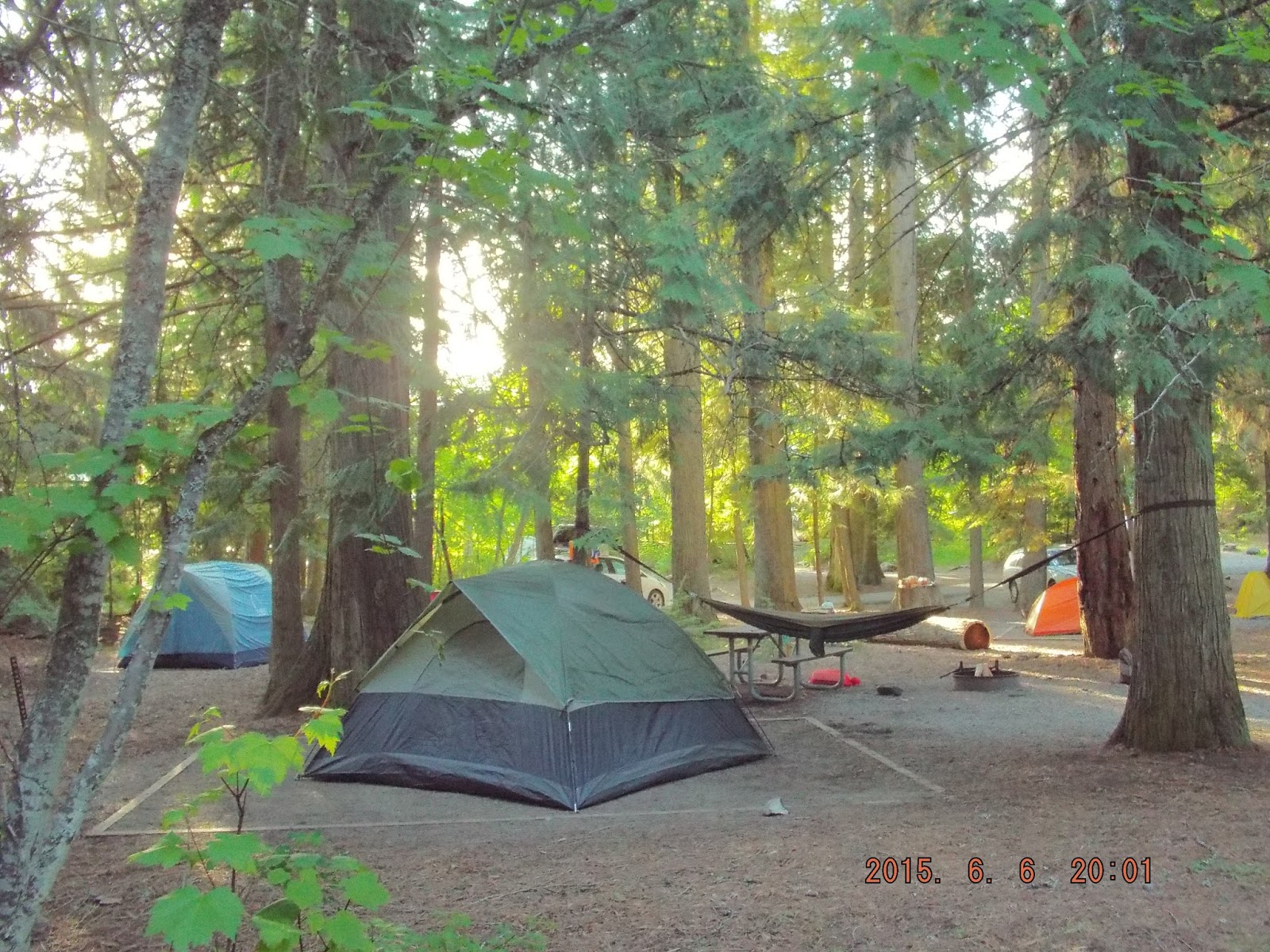
Campground in Bridger-Teton
National Forest. There was a
well for water. $5/night.
Those of you who have visited my blog site before know that it had been called the Musings of an Old Conservationist.  In fact, the address is still  www.oldconservationist.blogspot.com, but I realized that I was doing more than just conservationist/environmental posts. That's when I thought about my Nov 3rd post entitled Walden Pond Full-timers.  While most of what we do as Walden Ponders is conservation, environmentalism, or wilderness exploration there is a lot more of our life that I like to share. Hence Walden Pond Full-timer Revisited.  But I don't want to forget those of you who are new to my blog site and wonder about the name Walden Pond Full-timer.

If you are familiar with the American philosopher Henry David Thoreau you will remember that he left the village to live in a cabin he built himself by a small lake called Walden Pond. In his book entitled Walden Pond: Or , Life in the Woods Thoreau writes,

“I went to the woods because I wished to live deliberately, to front only the essential facts of life, and see if I could not learn what it had to teach, and not, when I came to die, discover that I had not lived. I did not wish to live what was not life, living is so dear; nor did I wish to practise resignation, unless it was quite necessary. I wanted to live deep and suck out all the marrow of life, to live so sturdily and Spartan-like as to put to rout all that was not life, to cut a broad swath and shave close, to drive life into a corner, and reduce it to its lowest terms.”

Home at Glacier National Park where we work as volunteers.
This is so descriptive of the attitude toward life that Pamela and I share that it gave birth to the term "Walden Pond Full-timer" or "Walden Ponder". Couple this with our love of nature, volunteering at national parks, hiking, kayaking, bicycling and scuba diving, you have a snippet not only of our lives but of the life of the Walden Ponder.
Pamela and I are far from unique in this group. This is why we do not claim the term as self-descriptive but include ourselves in the group. We have many friends, mostly volunteers in the National Park Service, who can be described as Walden Ponders. They live their lives in everything from camper trailers to large recreation vehicles. Despite the wide variety of trailers and RVs the first point of description is that we spend all or the vast majority of the year living in our trailers/RVs. Many of us will spend some weeks of the year visiting our children. This is one of the basic definitions of a 'full-timer' and therefore what makes a Walden Ponder a full-timer by definition. The second point of description is that you will rarely see any of us in one of the ubiquitous RV parks - KOA and the like. When we are on the road moving between long-term locations, you will usually find us boondocking (1) at a Pilot/FlyingJ, Walmart or other public parking area where we're allowed to stop overnight. If we are lucky we find a lovely little national or state forest campground which is out-of-the-way. Most such places are actually US Forest Service sites just off of two-lane highways but well out into the country like the Bridger-Teton campground pictured above. Our long-term places tend not to be the RV cities but campground host sites in national parks and similar more remote and secluded places.

The third point of description is that a significant percentage of us will avoid interstates. Our trailer, whose name is 'Willy', has tires rated for 65 miles per hour. This is very common. Why would we want to drive down an interstate where the speed limit is 70-80 miles per hour being constantly passed by traffic and seeing the same thing mile after mile?  If a state or federal highway has a 55-60 mph speed limit and passes through beautiful country and interesting towns, why wouldn't one want to go that route if time wasn't an issue?  Since most of us are retired, time generally isn't an issue. 
Ready to roll. 

The ubiquitous RV park.  
The fourth point of description is that most Walden Ponders are more self-contained than the standard full-timer. Looking at the picture to the left where we are ready to pull out, the truck is packed with all of our toys - two kayaks, two bicycles, scuba gear in a special locker, and extra camping equipment. Willy has everything he needs to run for 5-7 days without any outside utilities or water.  That is probably the greatest and least observable distinction.  The standard full-timer generally moves from full-hookup (all utilities including wifi, TV, etc.) to full-hookup with paved pull-through spots, sometimes paved patios, in a treeless city of RVs like the one to the left.  These are great if that's where you want to stay. When you stay at such campgrounds there is no need to have any more water or power than necessary for your time on the road. 

To be a Walden Pond Full-timer is to not only to accept the challenges of life on the road, but to seek out remote, relatively uninhabited, often wilderness areas where you, like Henry David Thoreau, want to "live deep and suck out all the marrow of life," seeking a life-style surrounded by nature such that we learn all that our species has forgotten and, when our days are over, die knowing that we have indeed lived.   
Out our door at a NFS campground

NOTE: Question are encouraged if you are interested in being a Walden Pond Full-timer as well as stories and comments from Walden Ponders that I can share. 

FOOTNOTES. 
(1) Boondocking - this is where one camps where there are no utilities; e.g. no electricity or water.  Often, when one boondocks, there are no toilet facilities either, but most of us have those in our campers.  Pamela and I have boondocked for almost an entire week at one time.  We had battery for lights and to power the pump which pumped water from a holding tank to the sinks and toilet. You will notice that camper trailers generally have one or more propane tanks up front.  This is used for cooking, hot water and furnace.